Water Damage Restoration Tarzana, CA
Tarzana water damage restoration crews trace the water path, recover standing water and dry affected materials to a measured goal. Clear source information and daily readings keep the work focused on what remains wet.
(888) 578-6508Discuss the wet-room responseThe drying plan follows the floor, wall and cavity conditions found during the assessment, including moisture beyond visible stains.
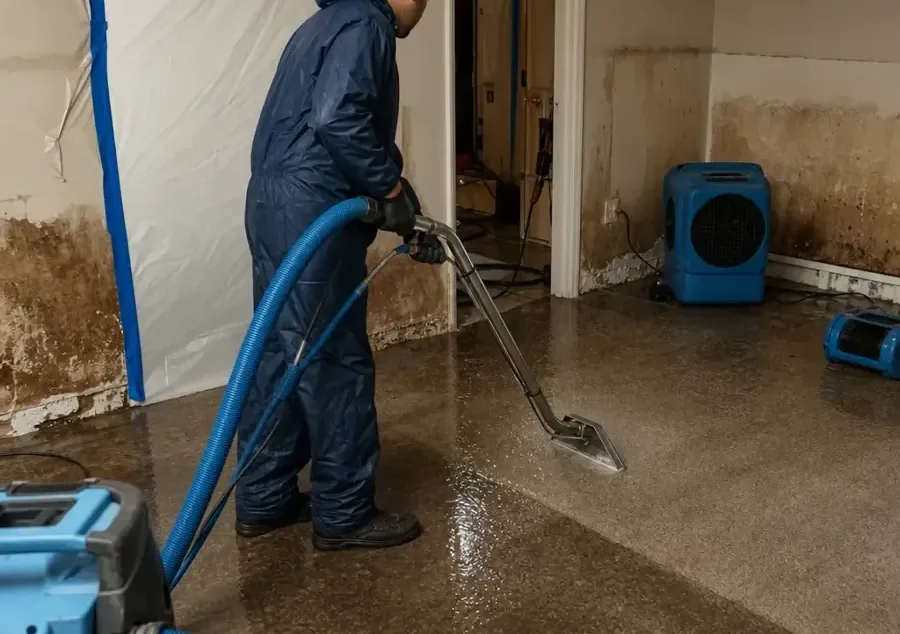
Water Damage Restoration Services in Tarzana, CA
Each water source leaves a different cleanup problem. The service assessment distinguishes fresh discharge, contaminated water and moisture trapped beneath finishes before selecting recovery, access and drying methods.
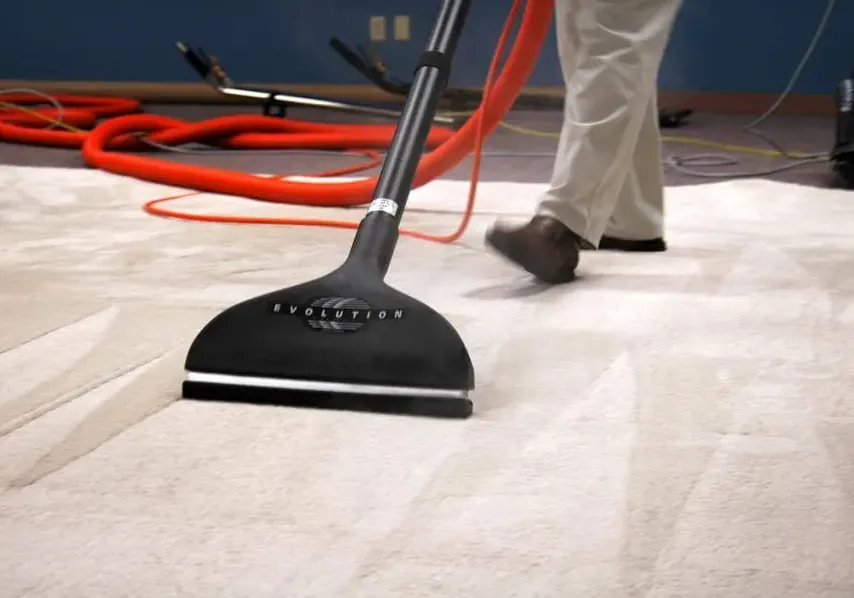
Water Extraction
Pooled water is recovered before the crew measures what remains inside the floor and surrounding wall edges.
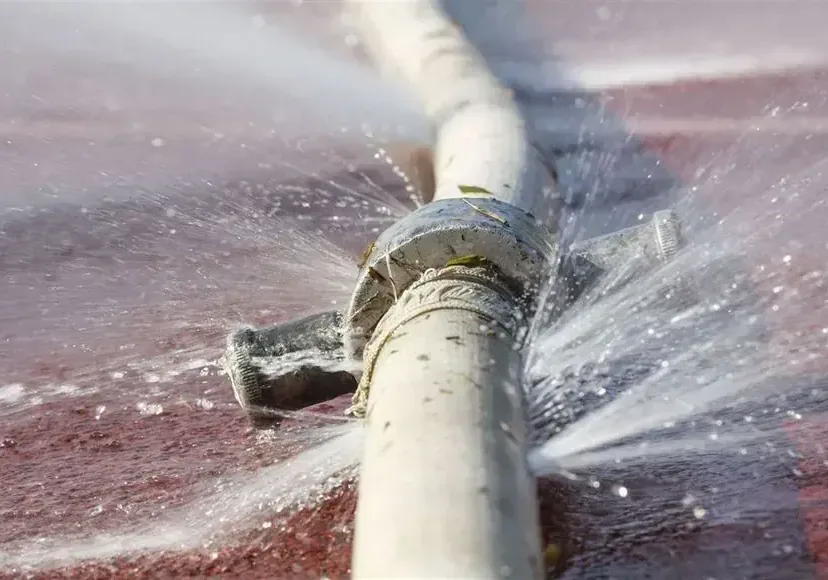
Burst Pipe Water Damage
Pressurized discharge can cross several rooms; the assessment follows that path after the plumbing source stops.
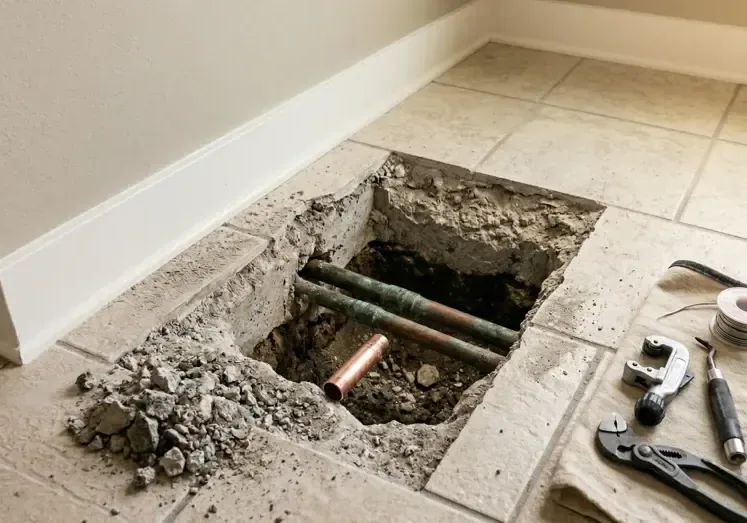
Slab Leak Water Damage
Under-floor moisture needs source diagnosis and an assembly check before openings, targeted drying or replacement flooring.
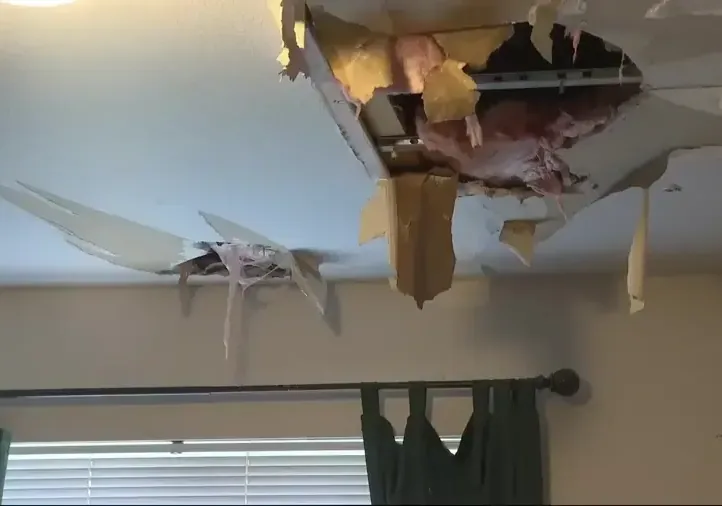
Ceiling Leak Water Damage
Overhead stains call for safe access, source tracing and checks above the finish before controlled ceiling work.
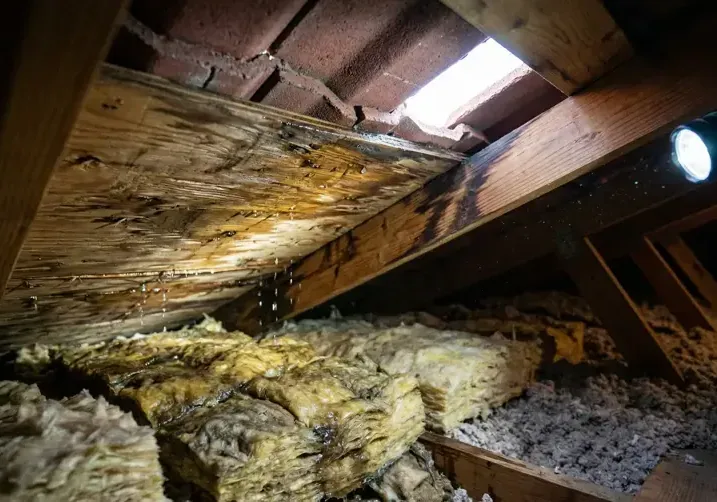
Roof Leak Water Damage
Rain entry can wet attic insulation and framing away from the visible drip; interior drying follows roof source control.
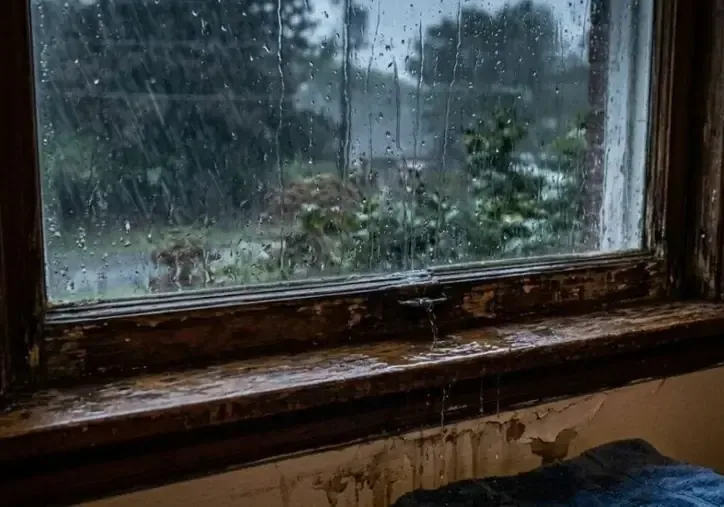
Storm Flood Cleanup
Outdoor water brings debris and contamination considerations that change material removal, cleaning and the sequence before drying.
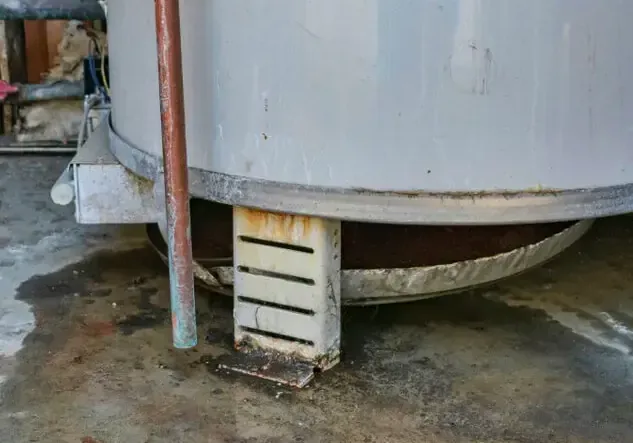
Water Heater Leak Cleanup
Tank-area water can hide below a platform or closet wall, with drying access coordinated around appliance repairs.
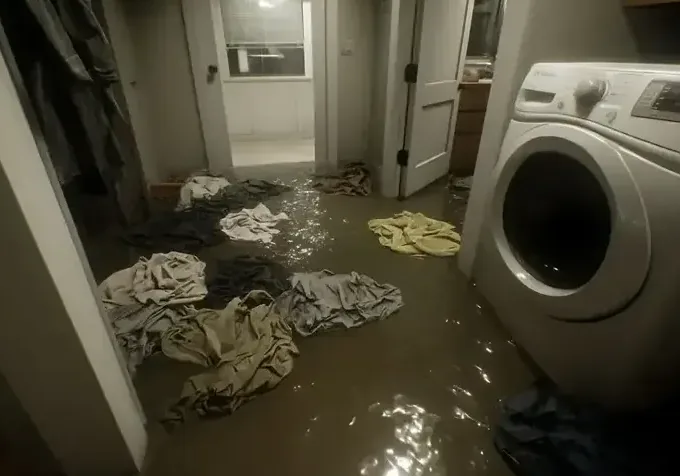
Appliance Leak Water Damage
Kitchen and laundry leaks travel behind machines and cabinets, requiring checks beyond the wet area at the front.
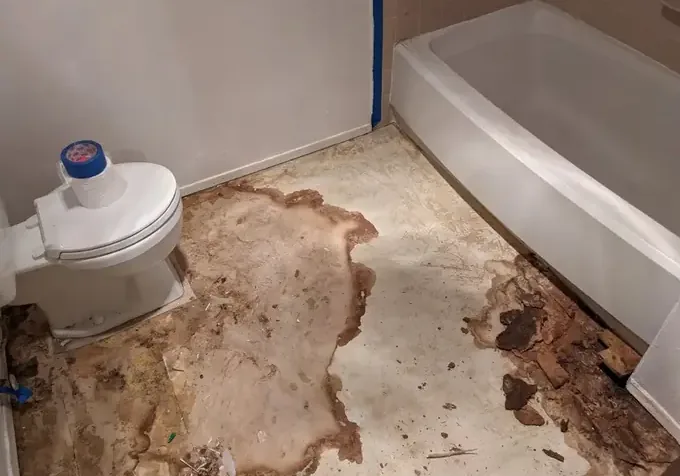
Toilet Overflow Cleanup
A bowl overflow differs from a tank leak; the water history determines bathroom containment and porous-material decisions.
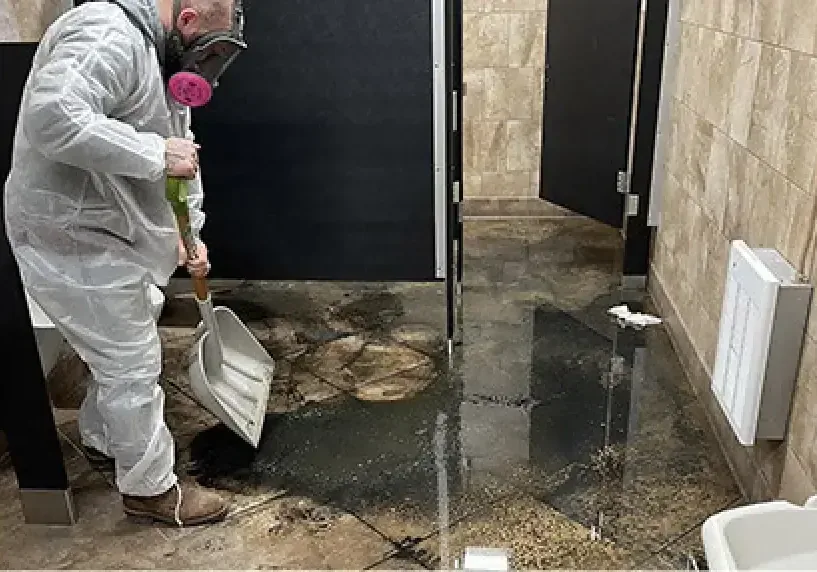
Sewage Backup Cleanup
Category 3 wastewater needs protected recovery, removal and cleaning before the remaining structure enters the drying stage.
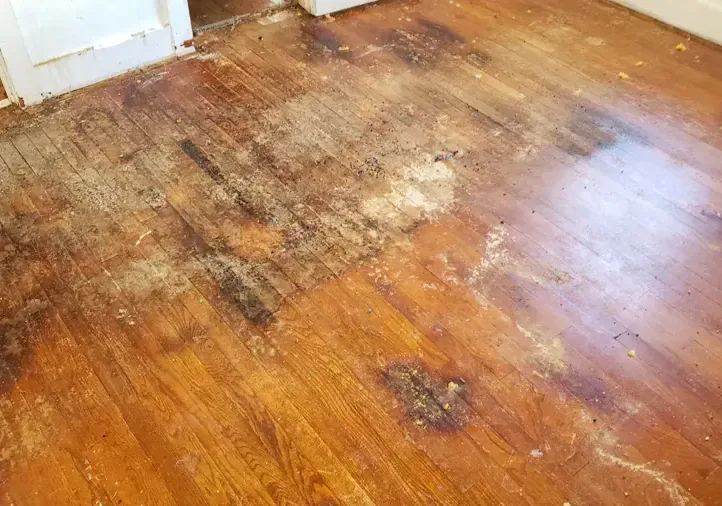
Hardwood Floor Water Damage
Board movement, substrate moisture and installation details guide the salvage decision before sanding or replacement begins.
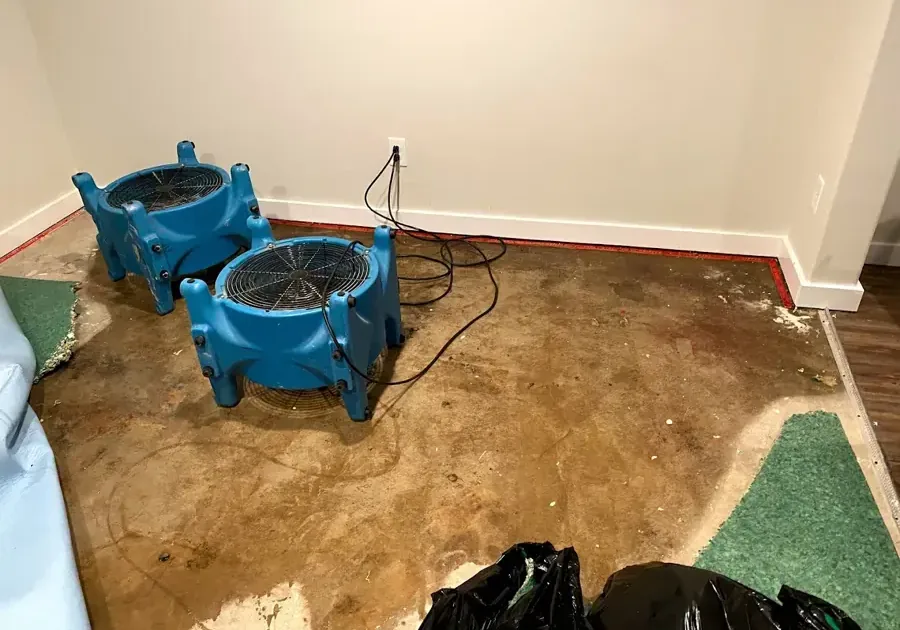
Structural Drying
Airflow and dehumidification work against measured material moisture, with equipment changes tied to the recorded drying response.
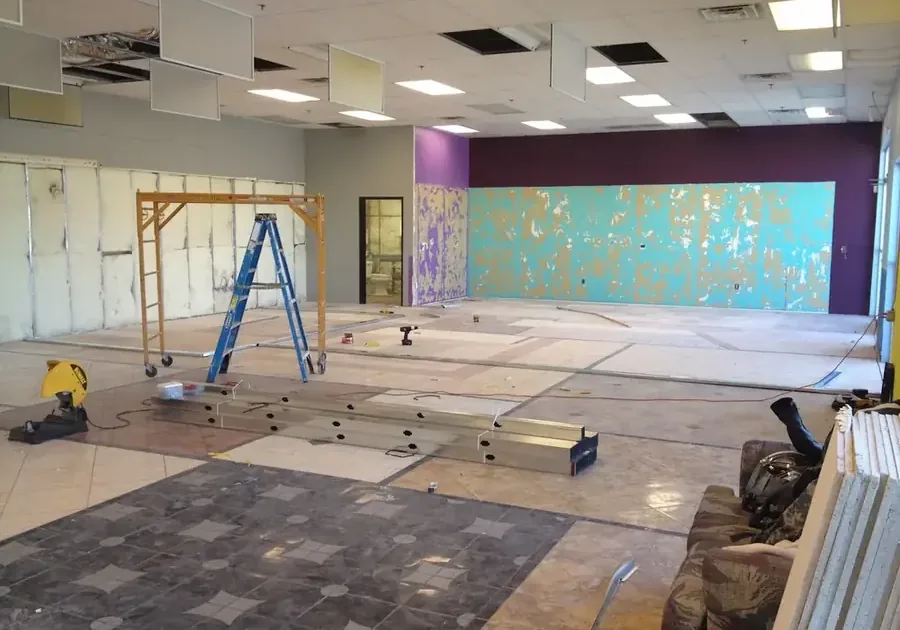
Commercial Water Damage
Property contacts, safe traffic routes and occupied areas shape extraction and drying work in affected business interiors.
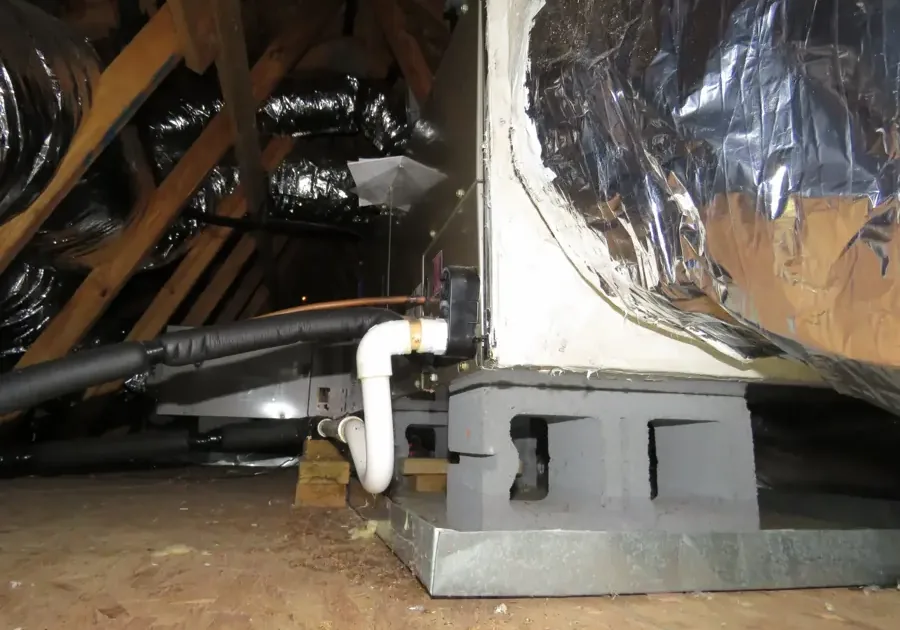
AC Condensate Water Damage
Mechanical drainage problems can soak concealed ceilings and walls; HVAC source findings guide the interior moisture assessment.
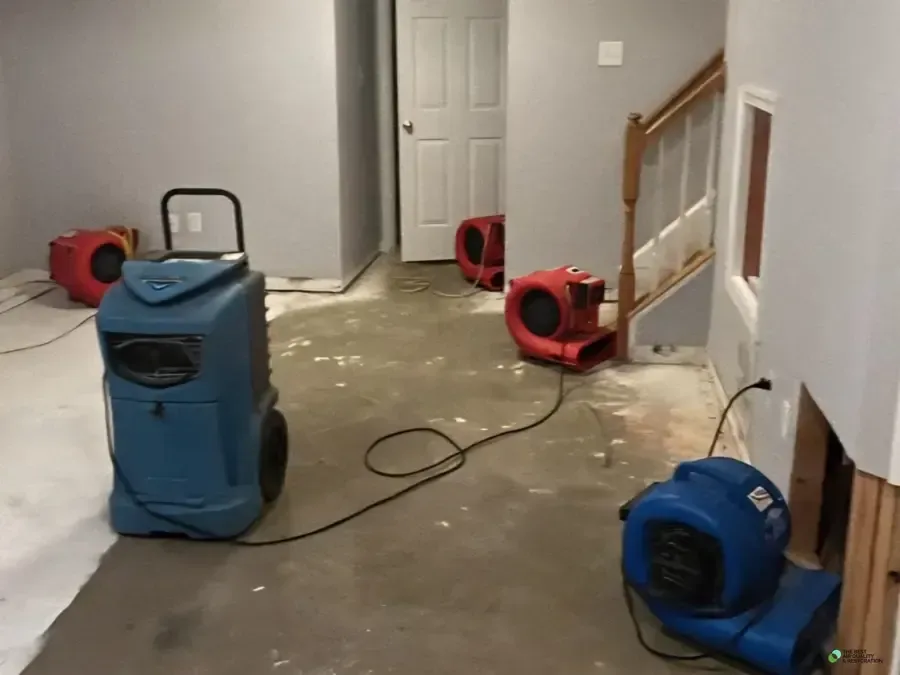
What to do while the water is still moving
- Stay outside hazards. Occupants avoid standing water near electrical equipment and keep clear of sagging ceilings. A safe route comes before belongings recovery.
- Limit the source safely. An accessible dry valve may stop supply water. Unsafe plumbing, electrical or mechanical conditions require the appropriate qualified trade.
- Record the initial condition. Photos from a safe doorway can show the source area, wet boundaries and damaged contents before authorized movement or removal.
- Separate affected spaces. Children and pets remain outside wet rooms. Contaminated items should not travel through clean rooms without a handling plan.
- Describe the loss. The caller identifies affected rooms, source status and access concerns so the restoration team can prepare for a property-specific assessment.
The restoration technician checks what the building can safely retain, what needs access and how drying progress will be measured before the next repair stage.
How a water loss is handled here
Recovery removes liquid water; controlled drying addresses what remains inside the building. The crew records both stages so the next trade can understand the condition beneath the finish.
- Step 1
Assess the water path
The technician identifies source status, contamination and access, then checks beyond the obvious puddle to define the wet material boundaries.
- Step 2
Recover and prepare
Extraction reduces free water while authorized material removal and cleaning give the remaining assembly a suitable route for controlled moisture release.
- Step 3
Manage the drying environment
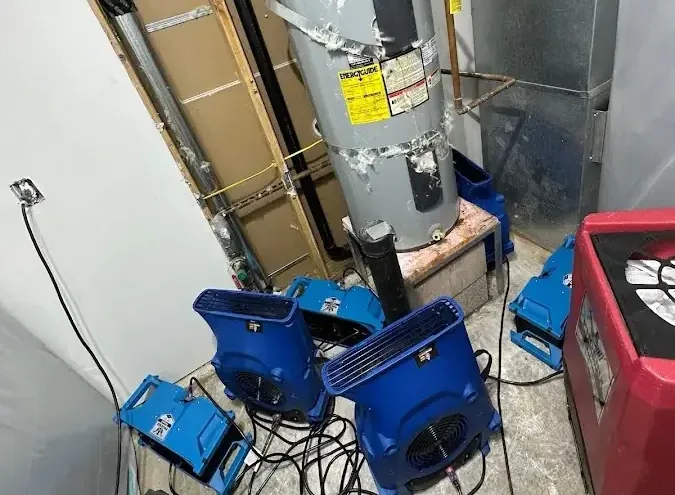
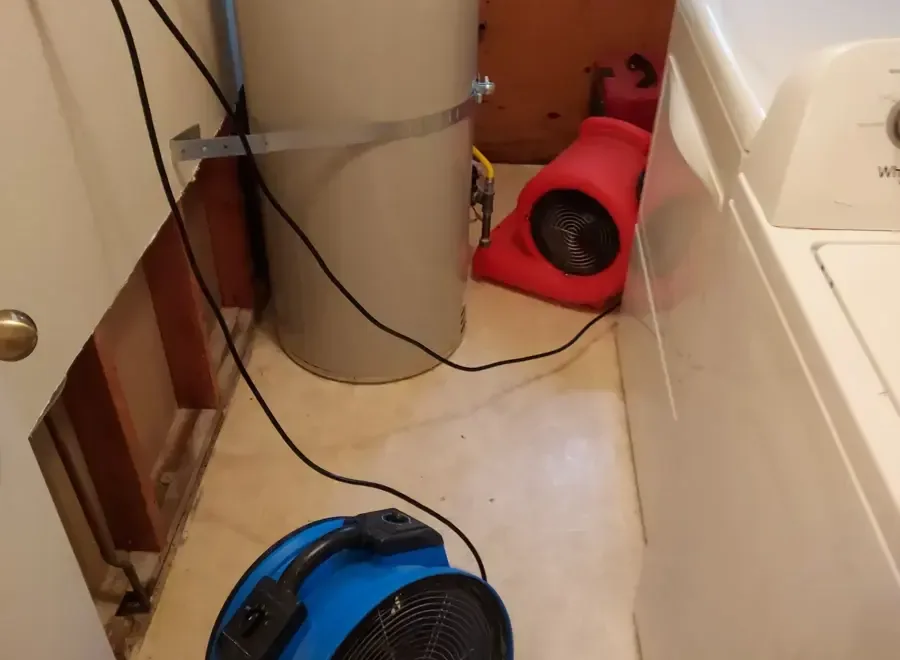
Air movers and dehumidifiers work together, with placement based on the exposed materials, room conditions and safe movement through the property.
- Step 4
Verify and hand off
Repeat readings show progress and completion, while the final record separates finished mitigation from flooring, wall or equipment repairs still needed.
Water damage dried to the IICRC S500 standard
Rapid local response
The 24/7 response starts with source and safety information, followed by an assessment of the rooms and assemblies affected by the loss.
IICRC S500 drying standard
The drying framework links contamination, material condition and equipment choices. Readings establish the endpoint instead of a fixed number of days.
Claim-ready documentation
Photographs, moisture maps and daily progress records explain material decisions and help the property representative review the work with the insurer.
Local water experts
The crew checks floor construction, plumbing access and hidden moisture in the affected rooms. Those findings guide equipment placement and the written drying plan.
What does water damage restoration cost in Tarzana, CA?
Water damage restoration in Tarzana commonly needs a $1,000 to $8,000 planning allowance for mitigation. Water category, wet area, material access and how quickly drying begins change the scope. Source repairs and reconstruction should be listed separately.
The water damage cost calculator offers a planning range. Actual charges depend on the inspected conditions and agreed written scope, including any separate repair work.
All water damage categories covered in Tarzana, CA
Category 1: initially clean
Fresh supply discharge may begin clean, but contact with dirty materials and elapsed time can change the assessment. The technician checks actual conditions.
Follow supply-water damageCategory 2: contaminated water
Used appliance discharge can require different handling from a fresh supply leak. Material condition and exposure determine the cleanup and removal plan.
Inspect appliance dischargeCategory 3: sewage and floodwater
Sewage and contaminated outdoor water require controlled handling, removal of unsuitable porous materials and cleaning before structural drying begins.
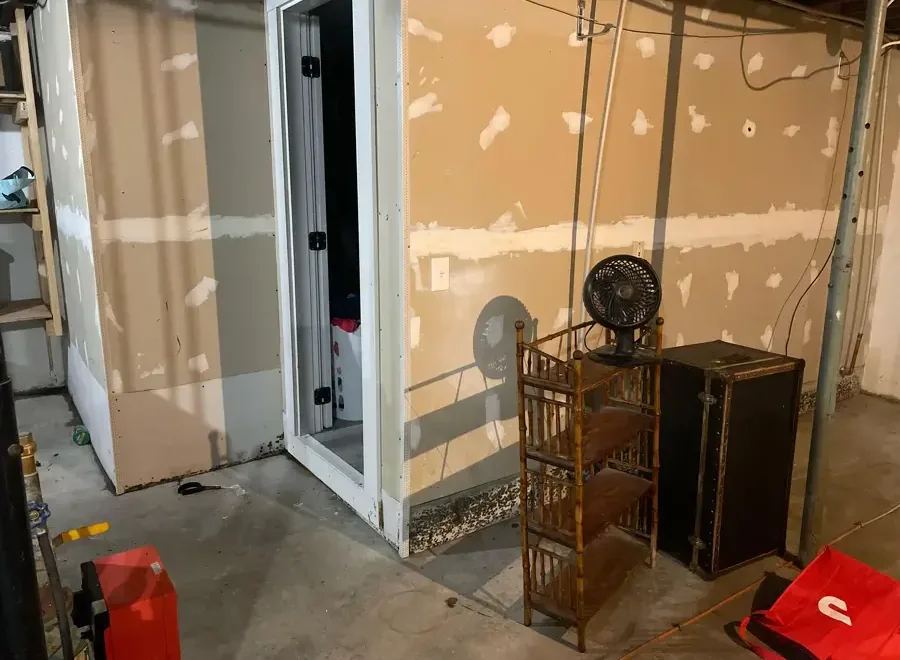
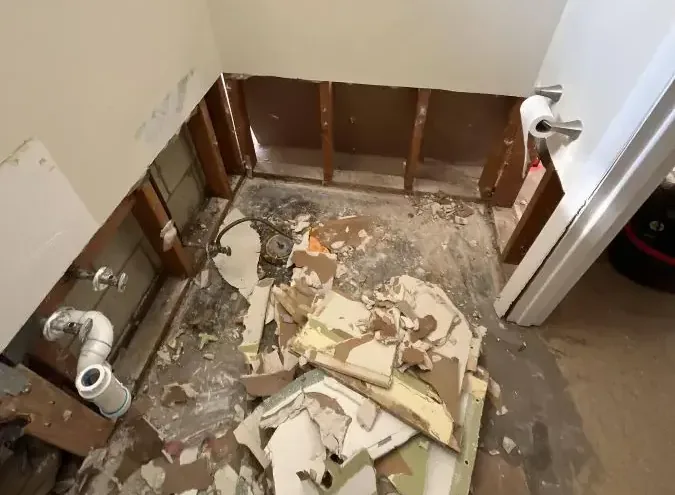
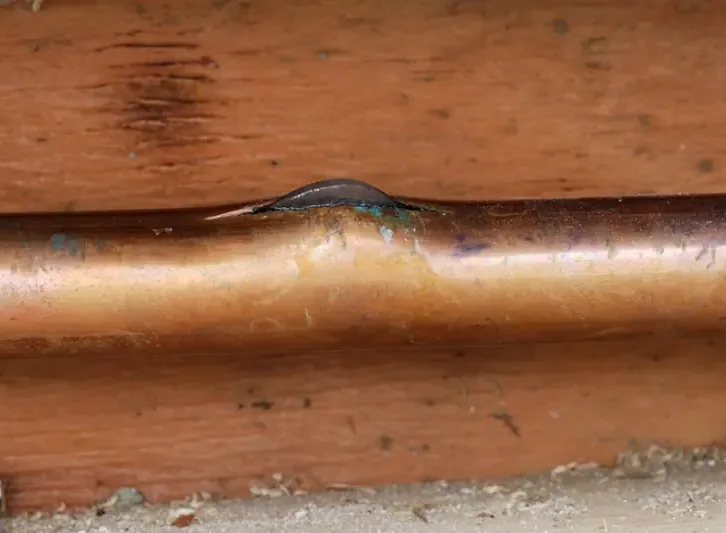
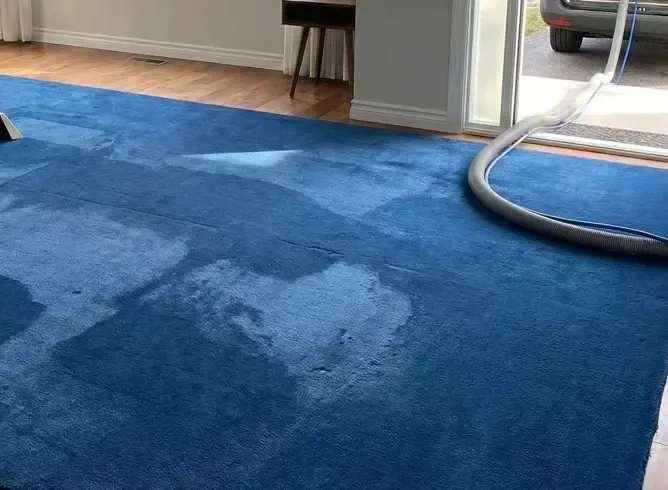
See Category 3 cleanupWhat a water damage dry-out looks like in Tarzana
Documentation for your insurance claim
The restoration file should explain where water traveled, which materials were affected and why the work changed. A property representative can then review the scope against the recorded conditions.
- Initial photographs before material removal
- The source history and water classification
- A room-by-room moisture map with reference points
- Daily material and indoor-air readings
- An itemized scope and equipment-change record
Coverage stays policy-specific
Sudden discharge and outside flooding can fall under different policy provisions. The policyholder should ask the insurer which terms apply to the actual event and retain the source findings.
The insurer reviews the documentation under the applicable policy. The drying-time estimator helps with scheduling, while material measurements and the agreed scope guide the work.
Water damage help around Tarzana, CA
Familiar local references
Ventura Boulevard, Victory Boulevard, Lindley Avenue, Corbin Avenue, Oakdale Avenue, Mulholland Park
Core ZIP coverage
91356, 91357
Nearby service towns
One call reaches Tarzana water damage pros, 24/7
The caller can describe the affected rooms, source status and any access restrictions. The assessment then checks the actual materials and the safe equipment route at the property.
Tarzana is a neighborhood of Los Angeles in the San Fernando Valley. The listed towns have their own pages and property-specific cleanup information.
(888) 578-6508Discuss access to the wet roomsWater damage conditions in the neighborhood
A hot-summer Mediterranean climate and the valley-to-foothill setting provide local context. The restoration scope still comes from the source history and the assembly found inside the affected building.
Southern terrain
Caballero Canyon sits on the north side of the Santa Monica mountains. After rain enters a home, the inspection traces the wet route through the roof, doorway or wall opening to the materials inside.
Boundary corridors
Victory Boulevard and Lindley Avenue define the northern and eastern neighborhood edges. The property contact can describe parking, gates and the affected entrance so the crew can plan equipment access.
Hidden indoor water
Supply and appliance discharge can enter closed floor and wall assemblies. Inspection follows material moisture beyond the visible puddle, whatever the season.
Roof and ceiling distinction
A ceiling stain may come from plumbing, condensate or rain entry. The source investigation determines which trade needs to stop the water before drying.
Public versus private source
Street flooding can block access while an indoor supply leak continues behind a closed door. The initial report should identify both the safe entrance and any source that still needs attention.
- Reported street flooding: CBS documented motorists trapped on a flooded Tarzana street. Occupants should stay clear of standing street water and arrange a safe route before cleanup equipment arrives.
Tarzana water damage restoration questions
What happens during the first assessment?
The technician checks source control, access hazards and the wet boundaries. Material readings help distinguish visible water from concealed saturation. The proposed scope explains recovery, any necessary openings and the intended drying record.
Does extraction leave the structure dry?
Extraction removes liquid water, but porous and covered materials can remain wet. Air movement, dehumidification and appropriate access address that residual moisture. Follow-up readings establish whether the assembly is responding to the drying plan.
How long does drying take?
A typical dry-out may take several days, but material density, access, contamination and continued entry change the timeline. The crew uses repeat readings to decide completion rather than promising a fixed equipment removal date.
Can a wet wall stay closed?
Sometimes targeted drying is appropriate, but wet insulation, contamination or limited airflow may require opening. The technician explains the material findings and why access is needed before the property representative authorizes removal.
Is sewage handled differently?
Yes. Sewage is Category 3 water from the start. Cleanup includes protective handling, removal of unsuitable porous materials and cleaning of appropriate remaining surfaces before controlled drying equipment addresses the structure.
What does the insurer need?
Source findings, initial photographs, material decisions and progress readings help explain the event and work. Coverage depends on the actual policy, so the property representative should confirm the applicable terms directly with the insurer.
Can occupants stay during the work?
That depends on electrical safety, contamination, material stability and the work boundary. The responsible specialists and property representative assess occupancy. The drying arrangement must preserve safe access and clearly identify restricted rooms.
Does warm weather dry hidden materials?
Floor and wall cavities can hold moisture through warm outdoor weather. Covered layers can remain wet even when the room feels comfortable. Measurements and access determine the restoration plan.
Who repairs the original source?
A plumbing, roofing or HVAC specialist may be needed depending on the source. Restoration addresses the resulting water damage. The written scope should identify each responsibility and coordinate source correction with recovery and drying.
Tarzana water damage restoration with a measured plan
The restoration team follows the water path, records material conditions and explains the drying work needed before repairs cover the affected assembly.
(888) 578-6508Arrange the first moisture assessmentTarzana Water Damage Restoration
Tarzana, CA and Los Angeles County
(888) 578-6508 · open 24/7
Water and sewage losses only
Find us on Google