West Hollywood Water Damage Restoration
Water crossing an apartment threshold or spreading beneath a shop floor needs a clear response. Restoration starts with the source, the affected materials and a practical plan for removing moisture from the building.
(888) 578-6508Discuss the wet roomsDescribe the water source, affected rooms and access arrangements when calling so the initial discussion starts with useful details.
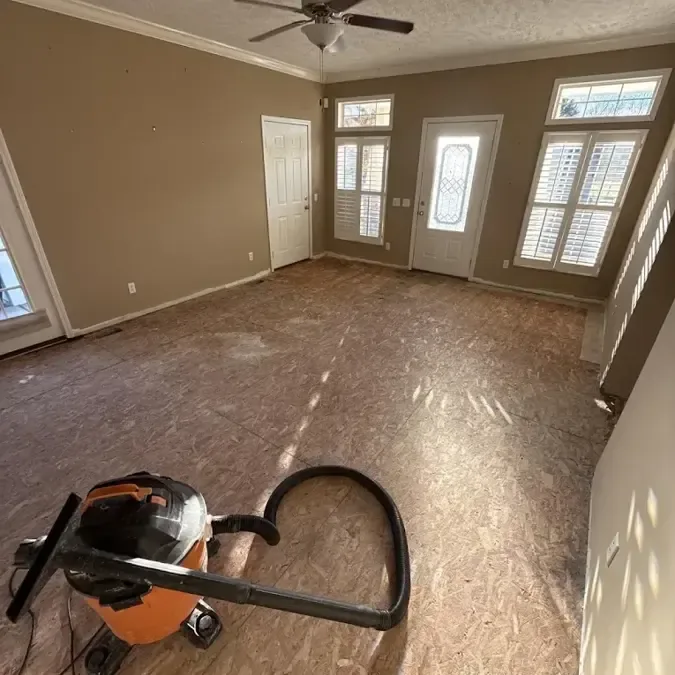
Choose the problem visible at the property
Different losses need different handling. A bathroom overflow, hidden supply leak and flooded garage each call for an assessment of contamination, access and the materials involved.
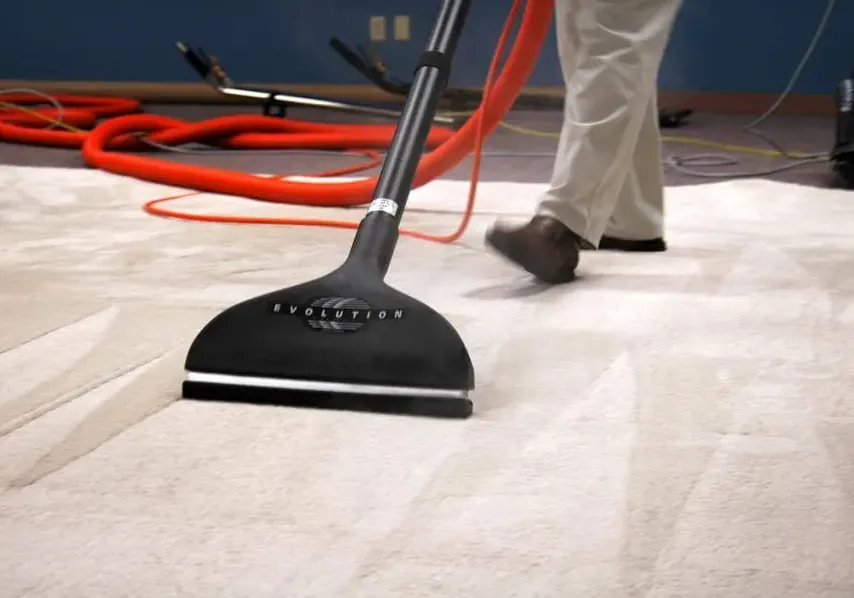
Water Extraction
Standing water removal reaches pooled areas and soaked floor coverings before attention turns to moisture inside adjoining materials.
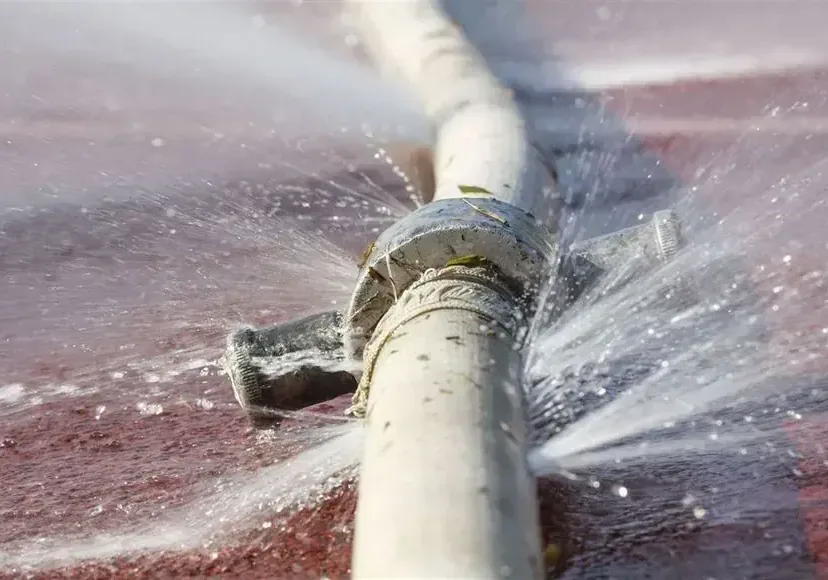
Burst Pipe Water Damage
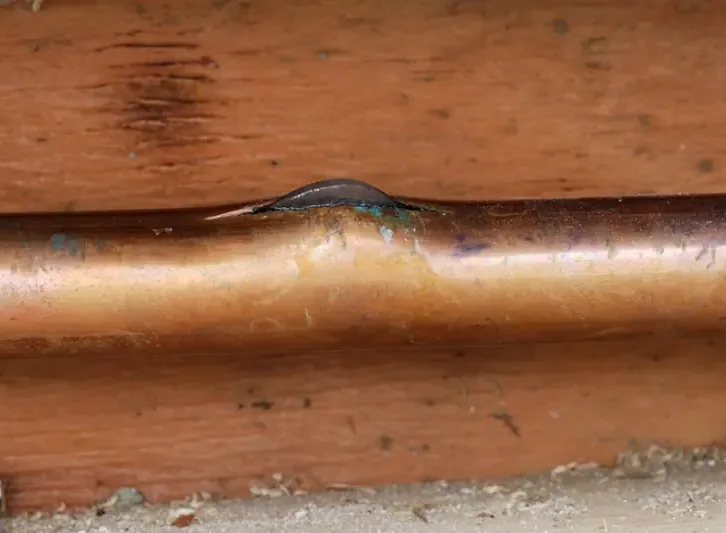
A broken supply pipe can wet several rooms; cleanup follows the discharge through walls, flooring and hidden edges.
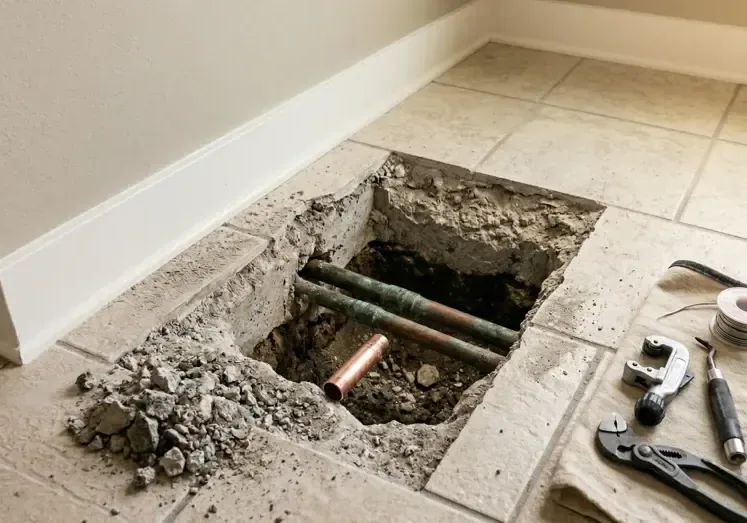
Slab Leak Water Damage
Damp floor edges warrant source investigation and moisture mapping before opening finishes or choosing a method for drying.
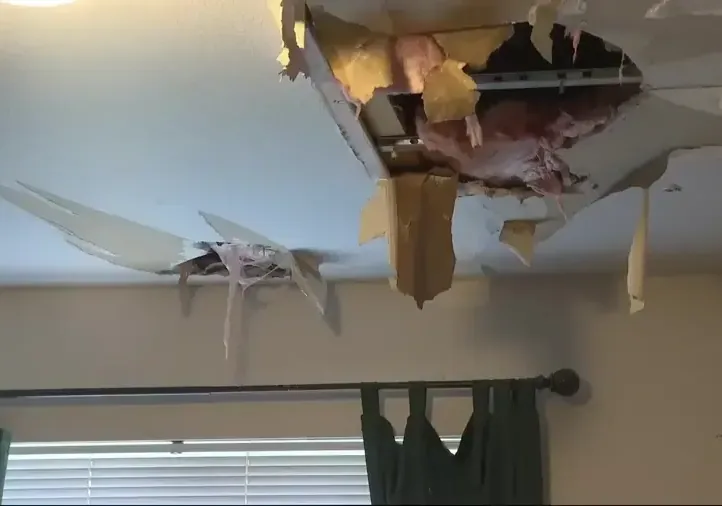
Ceiling Leak Water Damage
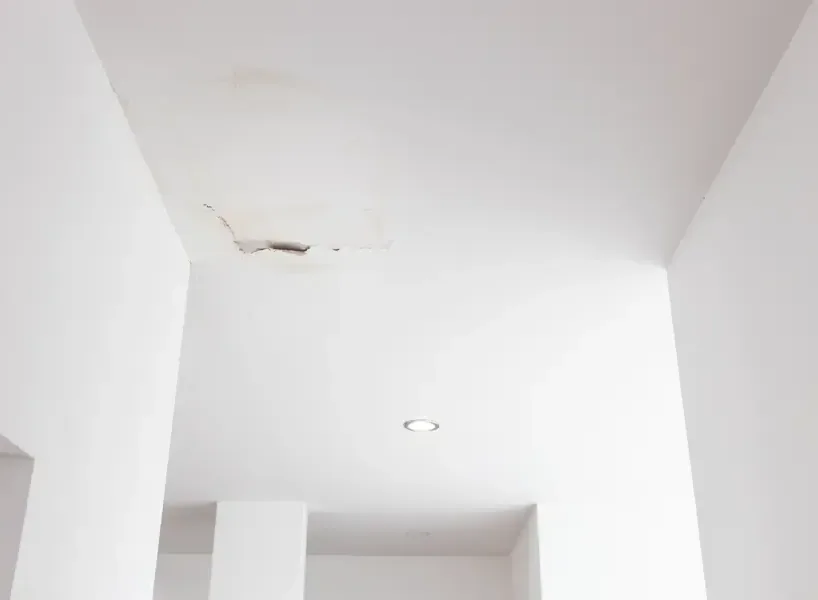
Overhead staining needs attention above the visible patch, including affected insulation, wall junctions and the space below it.
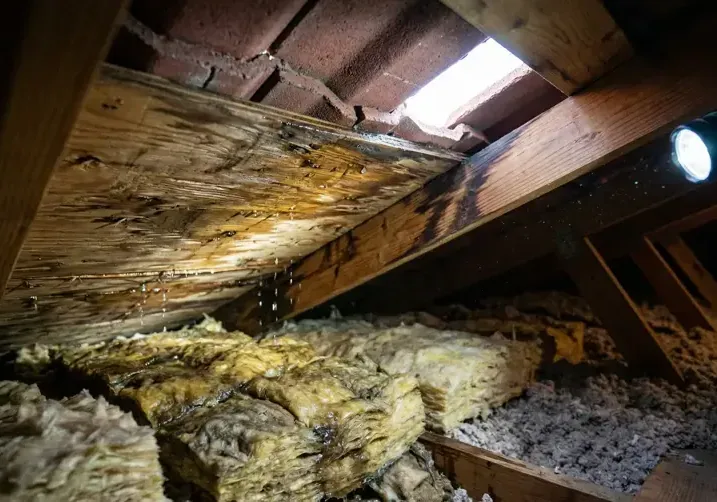
Roof Leak Water Damage
Rain entering overhead may travel before appearing indoors; interior restoration follows the wet path after source protection is arranged.
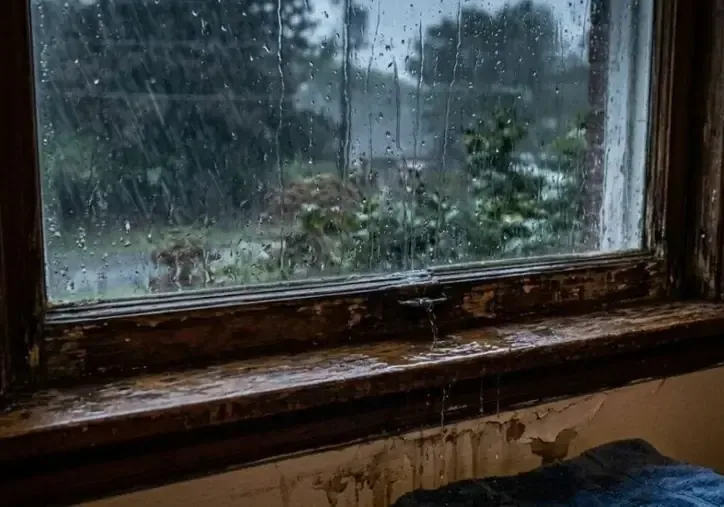
Storm Flood Cleanup
Water entering from outdoors brings a different cleanup challenge, with debris, contamination and wet contents assessed together.
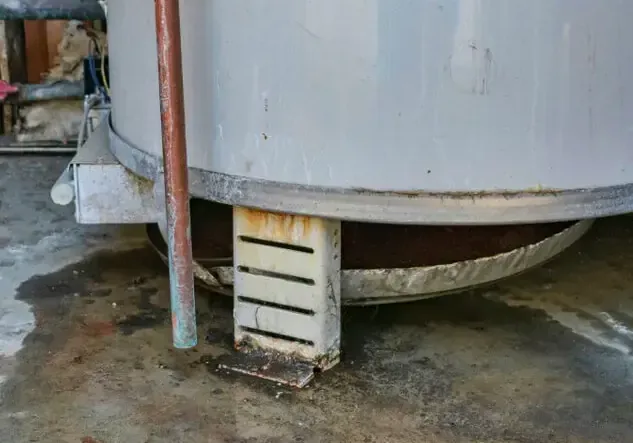
Water Heater Leak Cleanup
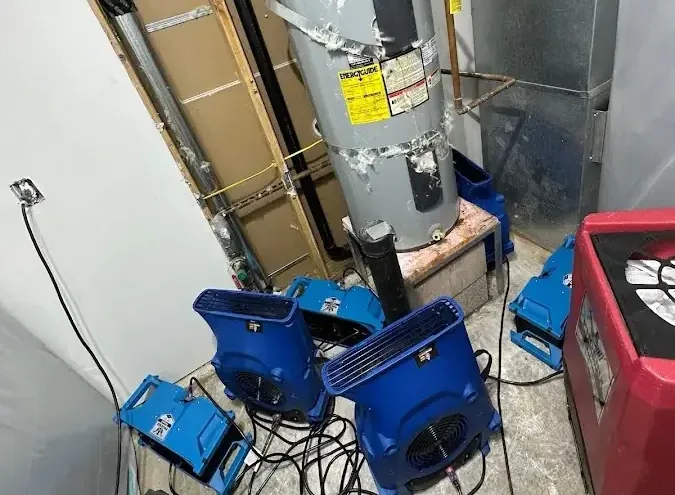
A leaking heater can soak its enclosure and adjoining floor; recovery accounts for inaccessible corners around the equipment.
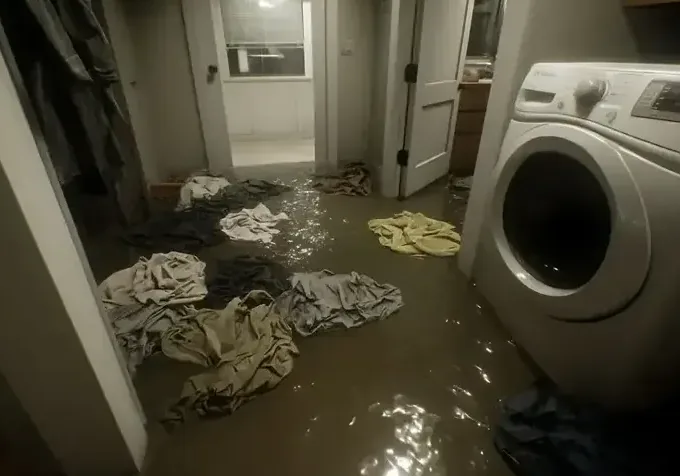
Appliance Leak Water Damage
Kitchen and laundry leaks need checks beneath cabinets and appliances, where a dry surface can conceal trapped water.
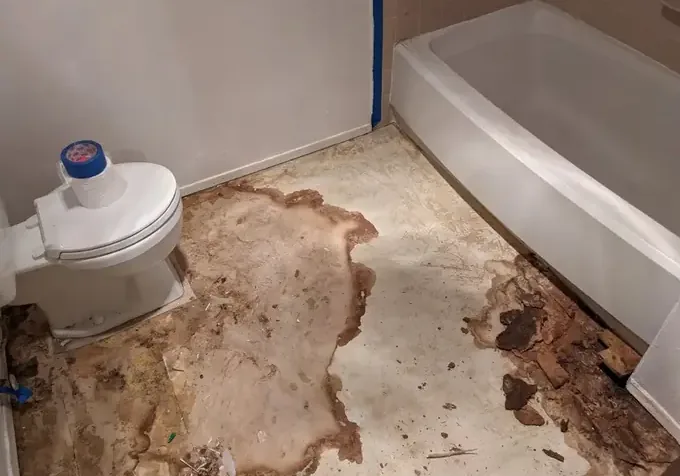
Toilet Overflow Cleanup
Bathroom overflow cleanup separates affected surfaces from clean areas and addresses water that has crossed the room threshold.
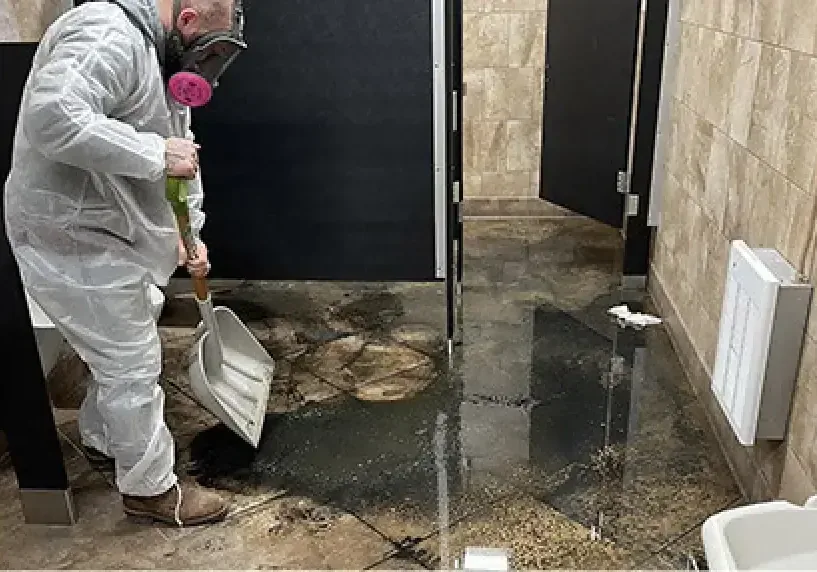
Sewage Backup Cleanup
A drain backup requires controlled removal, attention to porous materials and cleaning before the affected structure can dry.
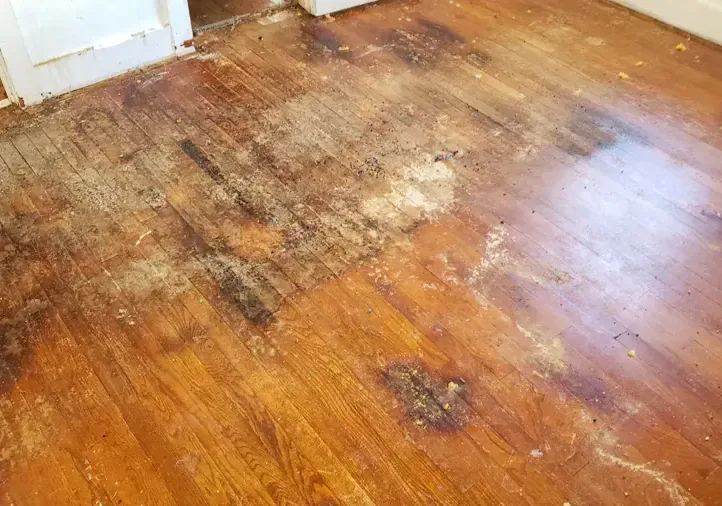
Hardwood Floor Water Damage
Wet boards need measured assessment of flooring and substrate before decisions about drying, removal or later finish repairs.
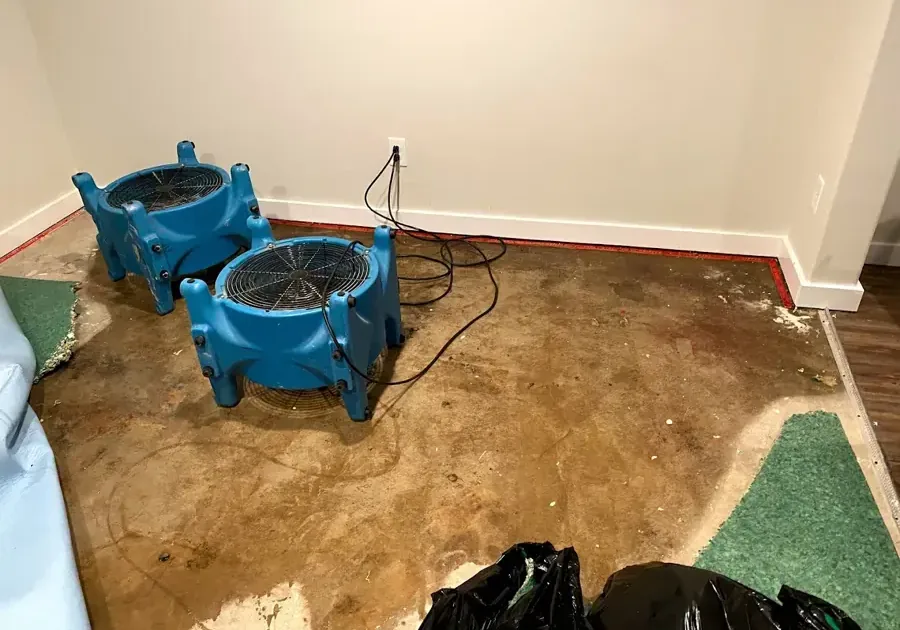
Structural Drying
Controlled airflow and moisture removal work together, with repeated material readings directing adjustments until drying goals are reached.
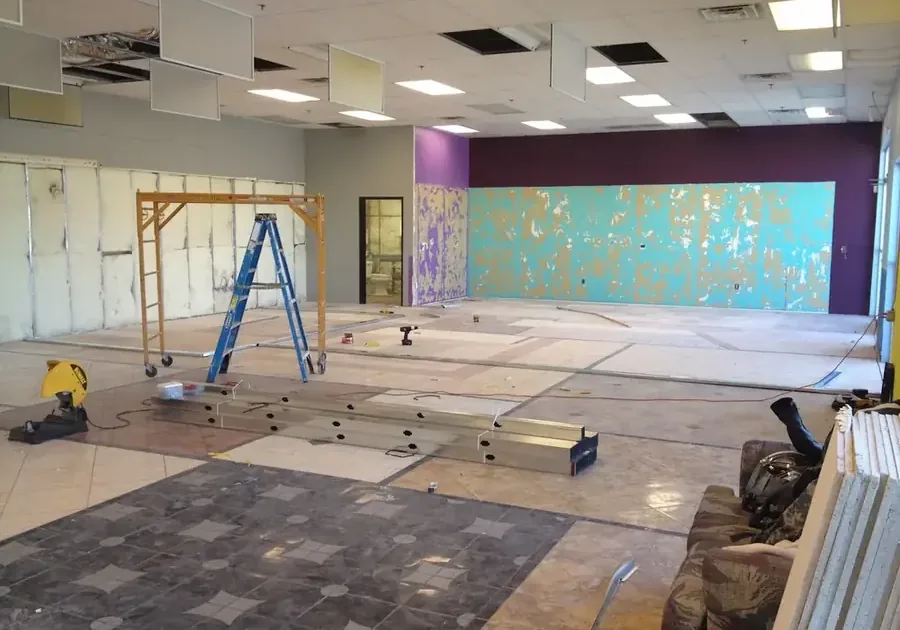
Commercial Water Damage
Business restoration coordinates access, affected stock and wet interiors so decisions about occupied and restricted areas stay clear.
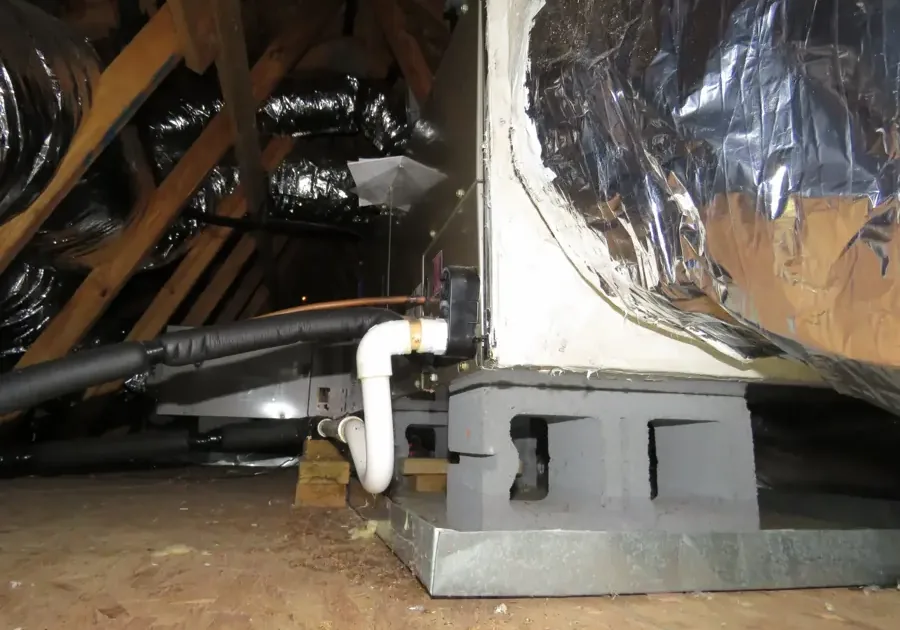
AC Condensate Water Damage
Condensate escaping an air conditioning system can wet concealed spaces; cleanup traces moisture beyond the first visible stain.
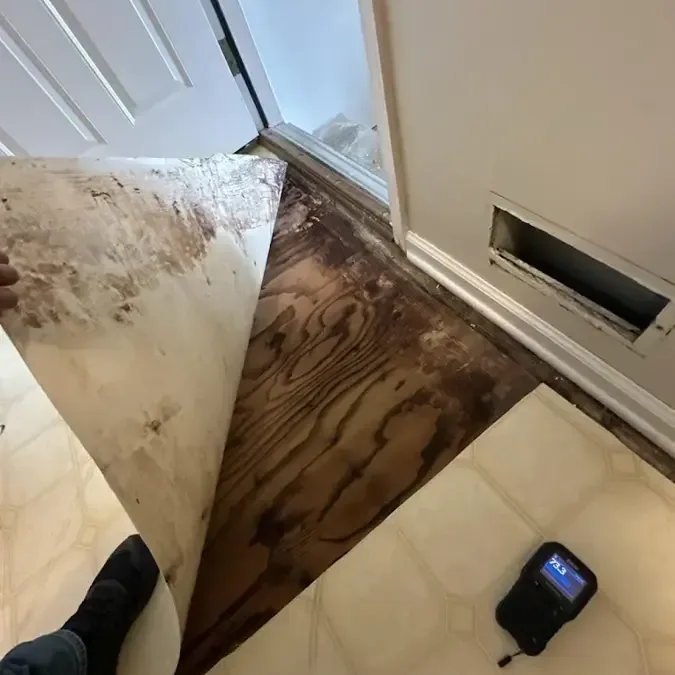
Keep the situation contained while help is arranged
- Separate people from hazards. Residents and visitors should stay clear of wet electrical equipment, unstable ceilings and wastewater while the source and safe access are assessed.
- Stop avoidable water use. A leaking appliance should remain unused. Building management or the appropriate repair professional can arrange source isolation without exposing occupants to wet equipment.
- Record the visible spread. Photos taken from a dry position can capture affected rooms, damaged belongings and the earliest signs of water before cleanup changes the scene.
- Contact the building representative. In an apartment, the manager needs details about adjoining units, common areas and access restrictions that could affect inspection or water removal.
- Discuss the next practical step. The first restoration conversation should identify the suspected source, whether water remains present and which spaces cannot currently be entered safely.
Useful restoration records connect each action to an affected material. Clear photos, moisture readings and written scope notes help everyone understand the work as conditions change.
A repair plan grounded in the building
Restoration works best when source control, cleaning and drying fit together. Each stage resolves a different problem before finishes conceal the affected structure again after the loss.
- Step 1
Establish the starting condition
The assessment records visible damage, material readings and likely water paths while identifying access limits and any immediate hazards within affected rooms.
- Step 2
Remove what keeps feeding moisture
Standing water and saturated materials that cannot remain are addressed before equipment placement, reducing the moisture load inside the work area.
- Step 3
Manage the drying environment
Air movement, humidity control and access to wet assemblies are adjusted together instead of relying on an open window or surface appearance.
- Step 4
Prepare a useful closeout
Final readings and remaining repair needs are recorded so replacement flooring, wall finishes or other reconstruction can be planned with a clear scope.
The sequence follows the water through the property
Visible boundaries
The wet area gets mapped beyond the obvious puddle so adjoining rooms and concealed edges receive attention where water has actually traveled.
Practical access planning
Apartment occupants, managers and business representatives can arrange entry and contents handling around the spaces that need inspection or equipment placement.
Material decisions
Salvage depends on condition, contamination and drying access. Removal should have a stated reason rather than being based only on surface appearance.
Documented progress
Followup readings connect equipment adjustments to actual drying progress and support a clear handoff when the space is ready for repair decisions.
What affects water damage costs in West Hollywood?
Water damage restoration in West Hollywood depends on affected area, contamination, concealed moisture and access. These planning ranges describe different levels of cleanup; an inspection establishes the actual work, equipment needs and any separate repairs to the source.
Plumbing repairs, replacement finishes and contents work may require separate allowances. The written scope should identify included work and explain changes when additional wet materials emerge.
The source changes how cleanup proceeds
Supply water escape
Water from a broken supply pipe needs prompt removal, with condition and contact with building materials assessed before choosing what can stay.
Trace the pipe dischargeAppliance discharge
An appliance leak may involve supply water or used wash water. That distinction affects handling of cabinets, floor coverings and nearby belongings.
Inspect the appliance footprintContaminated drain return
Sewage entering occupied rooms needs restricted access and controlled cleaning. Porous items require separate decisions before normal use of the space resumes.
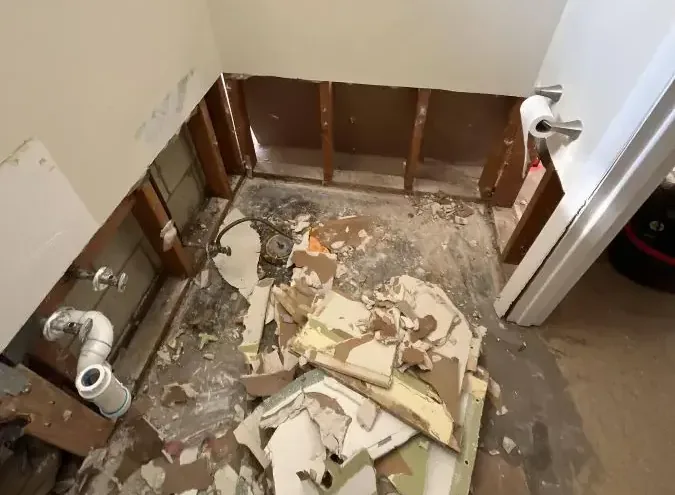
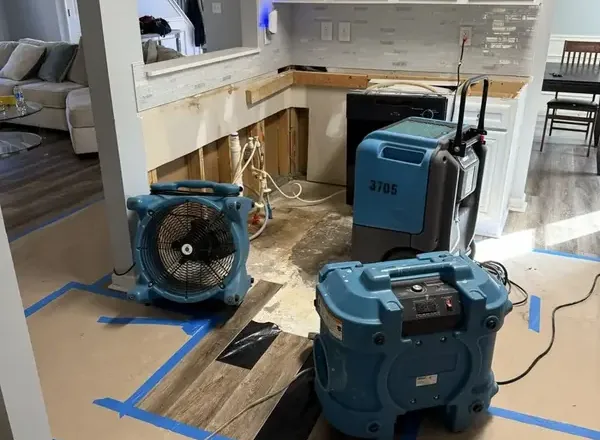
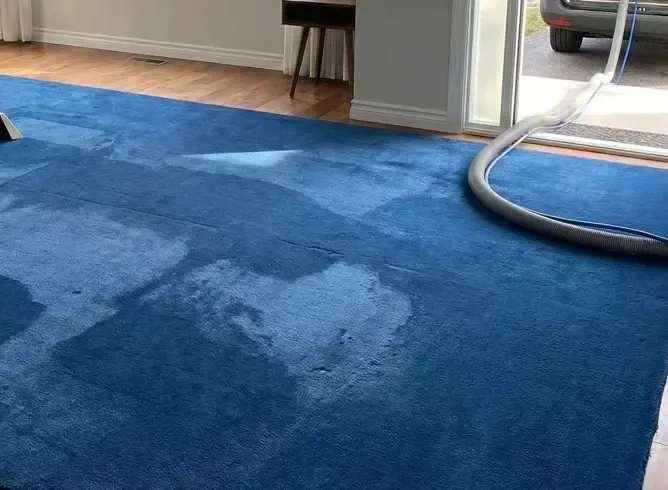
Separate the affected areaEquipment, exposed materials and water removal in practice
Build a clear loss record
A useful claim record describes what happened and what was affected. Photos, written observations and itemized restoration documents help the insurer assess the loss under the applicable policy terms.
- Photographs of each visibly affected room
- Date and circumstances of the discovery
- Damaged contents listed with supporting photographs
- Source repair findings and service paperwork
- Restoration scope, invoices and drying records
When payment comes directly
A property owner paying directly benefits from the same clear scope. The estimate should separate urgent mitigation from replacement finishes and describe how concealed damage could change the work.
For shared buildings, the authorized contact should clarify access and approval arrangements before work begins. Payment responsibilities belong in that discussion rather than being assumed from occupancy.
West Hollywood property assistance
Recognizable streets and areas
Sunset Strip, Palm Avenue, Holloway Drive, Santa Monica Boulevard, Melrose Avenue, Robertson Boulevard
Listed mailing ZIPs
90038, 90046, 90048, 90069
Other service areas
Describe the building as well as the location
Norma Triangle and the city's commercial corridors contain different access situations. A caller can help by describing the affected floor, entry arrangements and whether common areas are involved.
The city has small lots and mixed land use. Equipment staging, occupant access and the path for removing wet materials should be discussed for the specific property.
West Hollywood, CA · [email protected]
(888) 578-6508Explain access to the wet areaStreet flooding and indoor leaks need distinct responses
West Hollywood's water losses can involve indoor plumbing, seasonal rain or water arriving from the street. Identifying the actual entry route keeps the restoration plan focused on the affected property.
Garage flooding
The July event reached apartment garages. After water enters a shared garage, access, electrical hazards and affected stored belongings all need assessment before cleanup proceeds.
Winter rain
Rainfall is concentrated in winter. Interior staining that appears during rain calls for tracing the entry path and arranging source protection alongside cleanup of affected materials.
Shared interiors
The city's apartment building history makes communication relevant to a residential loss. Managers can coordinate entry when moisture inspection needs access beyond the initially affected unit.
Business disruption
Some businesses closed to assess damage after the major July break. A commercial response should identify restricted areas, affected stock and practical requirements for continued operations.
Separate pipe incidents
Another main broke at Santa Monica Boulevard and Laurel Avenue in July. LADWP described the events as unrelated; each property still needs its own source assessment.
- July 2026: A major water main break near Sunset Boulevard and Holloway Drive sent water along Palm Avenue, flooding apartment garages and the Metro bus yard.
Questions before restoration begins
Does water removal finish the restoration work?
Water extraction removes pooled liquid, but materials can retain moisture afterward. Readings in flooring, walls and other assemblies help determine where structural drying remains necessary before repairs or replacement finishes begin.
Who needs notification when an apartment leaks?
Building management and the affected occupant should exchange details about the discovery and access. An upstairs source, shared corridor or adjoining unit may require coordinated inspection beyond the room where water first appeared.
Can a dry looking wall still need attention?
Yes. Paint and wall coverings can look normal while moisture remains behind them. Material checks help identify hidden wet areas and avoid closing a repair before the affected assembly has dried.
Are the July floods treated as storm damage?
The documented July incidents were public water main breaks. The cause and water path should be recorded accurately for each property, with cleanup decisions based on actual contact, contamination and affected materials.
How is the restoration estimate established?
The assessment considers wet area, material type, contamination and access. A written estimate should explain removal, cleaning and drying work, then identify source repairs or finish replacement that require separate arrangements.
Should wet belongings be thrown away immediately?
Damaged items should be photographed and listed when safe. The restoration assessment can separate items suitable for cleaning from those that require disposal, while claim instructions may affect the documentation needed.
Can a business remain open during cleanup?
That depends on safe access, affected equipment and separation of the work area. The business representative and restoration team should establish usable areas and restrictions before staff or customers enter wet spaces.
Does opening windows replace drying equipment?
Material measurements show where moisture remains after a room is ventilated. Equipment choices depend on indoor conditions and the affected assembly, with readings used to judge progress and adjust the approach throughout drying.
Which locations help describe a service request?
A neighborhood such as Norma Triangle or a corridor such as Santa Monica Boulevard helps orient the discussion. Building access, the affected floor and the water source are also useful details for planning.
Turn the first observations into a practical response
A clear account of the leak, wet rooms and building access helps establish the next steps for removal, cleaning and measured drying.
(888) 578-6508Discuss restoration for the propertyTarzana Water Damage Restoration
Tarzana, CA and Los Angeles County
(888) 578-6508 · open 24/7
Water and sewage losses only
Find us on Google