Hardwood Floor Water Damage in Calabasas
A raised board edge tells only part of the story beneath a wet floor. Calabasas hardwood assessment considers moisture through the assembly, the installation and visible damage before choosing drying access or deciding how the finished surface should be restored.
(888) 578-6508Assess the wet wood floor assembly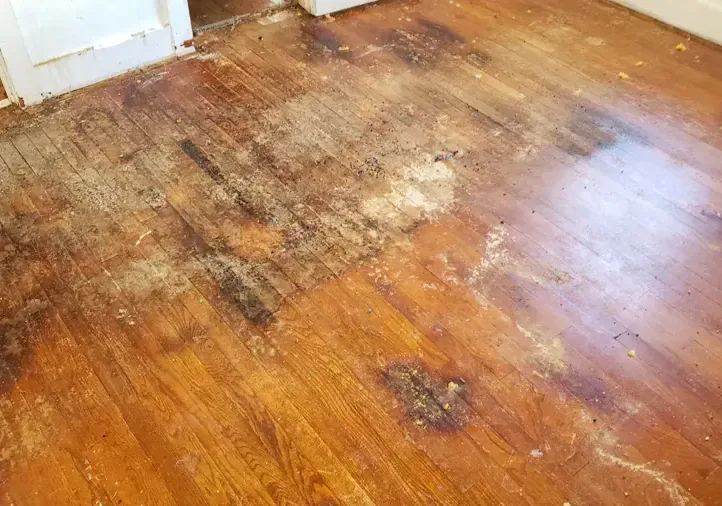
First steps for hardwood floor water damage
- Avoid lifted board edges. Raised flooring can catch feet and worsen under load. Occupants should avoid forcing boards flat or moving heavy furniture across them before the assessment.
- Remove safe surface obstructions. Dry movable rugs or contents can be relocated when access is safe, exposing the floor boundary for measurement without dragging wet materials through unaffected rooms or across sound boards.
- Describe the water and floor history. The assessment benefits from knowing when water appeared, how long it remained and whether the affected floor previously had movement, repairs or coverings over it.
- Postpone sanding and finish application. Cosmetic work should wait until moisture conditions and board stability have been evaluated, allowing the flooring professional to choose repairs from the settled condition of the affected assembly.
What does hardwood floor water damage cost in Calabasas, CA?
Hardwood water damage work in Calabasas depends on board condition, substrate saturation and drying access. These ranges describe the mitigation scope. Sanding, finish matching and replacement flooring should be identified separately when the remaining repair work is assessed.
For a closer planning number, run the water damage cost calculator. The restoration contractor who responds prices the job after the walkthrough and the moisture map.
How hardwood floor water damage proceeds
- Step 1
Map moisture and board movement
The inspection records distortion and moisture across the floor, compares suitable reference boards and checks connections to wet substrates or adjoining walls before selecting access.
- Step 2
Evaluate retention and access together
The floor's attachment, construction and condition shape the opening decision, allowing the drying approach to address trapped moisture while documenting boards that cannot remain suitable for restoration.
- Step 3
Track retained floor materials
Readings follow boards and accessible substrate during drying, showing where moisture responds and where further access or material decisions are needed.
- Step 4
Hand findings to the flooring trade
The record identifies retained boards, openings and damage so refinishing or replacement can be planned from the assessed condition after moisture mitigation addresses the assembly.
A wood floor can change shape after water reaches it from above or below. The surface may feel dry while the underside remains damp, producing an uneven moisture condition through the board. An assessment should therefore look at the entire assembly before sanding, fastening or replacing individual pieces is proposed.
Inspect the installation before choosing the treatment
Park Moderne began as an artists colony and is also known as the Bird Streets, including Blackbird and Hummingbird. For a wet floor in this residential setting, the useful property details are the board construction, attachment and layers beneath it. Those details come from the actual floor inspection.
A rug can hide a wet patch or restrict evaporation from the finish. Cabinets and transitions can also conceal the edge of the damage. Mapping those boundaries helps distinguish isolated board wetting from moisture spread across a connected substrate that continues into the next room.
Make retention decisions from condition and access
Some boards may remain suitable for drying, while others have loosened, split or lost their bond. The ability to reach the wet underside matters alongside the visible surface. Selective lifting may expose a trapped layer, but the access plan should account for installation details and the condition of adjacent boards.
- Compare readings in affected boards with suitable dry reference flooring.
- Inspect the substrate where access reveals moisture beneath the visible surface.
- Record cupping, gaps or lifted sections before finish repair decisions begin.
- Keep rugs and replacement coverings off surfaces still undergoing moisture assessment.
Separate moisture recovery from cosmetic repair
If a concealed pipe source is involved, slab leak damage assessment connects the floor condition with source location. Where the water has already been controlled, structural drying addresses moisture in the exposed substrate and adjoining components.
Sanding a floor while its moisture condition is changing can complicate the later finish result. The flooring trade needs the drying findings and an assessment of remaining board damage before choosing refinishing or replacement. A clear handoff records which areas were retained, which were opened and what still needs attention.
Equipment should support the selected drying method without blocking exits or creating loose hoses across normal walking paths. Progress checks can then show whether the retained floor responds or whether the access and material plan needs adjustment.
Hardwood floor water damage around Calabasas
Wood floor damage assessment is available throughout Calabasas ZIP areas 91301 and 91302. Access planning should identify raised boards, affected coverings and connected rooms so measurements can follow the flooring and its underlying moisture path.
The same service nearby: hardwood floor water damage in Tarzana, Beverly Hills, San Fernando.
Related water damage services in Calabasas
Hardwood Floor Water Damage questions in Calabasas, CA
Will every cupped board need replacement?
Cupping needs assessment alongside moisture, attachment and physical damage. Some material may respond to an appropriate drying approach, while other boards remain unsuitable. The decision should follow inspection and progress findings rather than the appearance of a single edge.
Can sanding begin as soon as the surface feels dry?
Moisture measurements assess the board and substrate beneath the dry surface. Sanding should follow the flooring assessment and drying findings so the repair reflects the condition of the entire assembly and any remaining physical damage.
Why measure an unaffected section of flooring?
Comparable dry material helps interpret the readings from the wet area. The reference should suit the actual floor construction, providing context for the moisture assessment instead of relying only on a surface appearance or a general drying expectation.
Should rugs stay on the floor during drying?
Rugs can hide dampness and restrict evaporation. The assessment should determine safe removal and the condition of both the rug and floor, keeping affected coverings separate until each material is ready for its next handling or restoration step.
What if the wet area continues under cabinets?
The inspection should address that concealed boundary because a connected substrate may remain damp beneath the cabinet edge. Access choices need to account for the installation and the ability to dry or remove the affected material effectively.
Does successful drying restore the original finish?
Drying addresses moisture, while discoloration, damaged coatings or board movement may leave separate repair needs. The flooring trade should assess those conditions after the moisture findings are available and identify suitable refinishing or replacement work for the affected area.
Plan the floor repair from measured conditions
A clear moisture and damage record helps distinguish drying work from refinishing or replacement, giving the property owner and flooring trade a practical basis for the next repair decision.
(888) 578-6508Arrange a wood floor assessmentTarzana Water Damage Restoration
Tarzana, CA and Los Angeles County
(888) 578-6508 · open 24/7
Water and sewage losses only
Find us on Google