Slab Leak Water Damage in Calabasas
Damp flooring without an obvious spill deserves a closer look below the finish. Calabasas slab leak cleanup maps moisture, coordinates with source repair and addresses the wet floor assembly before coverings are restored.
(888) 578-6508Discuss moisture beneath the flooring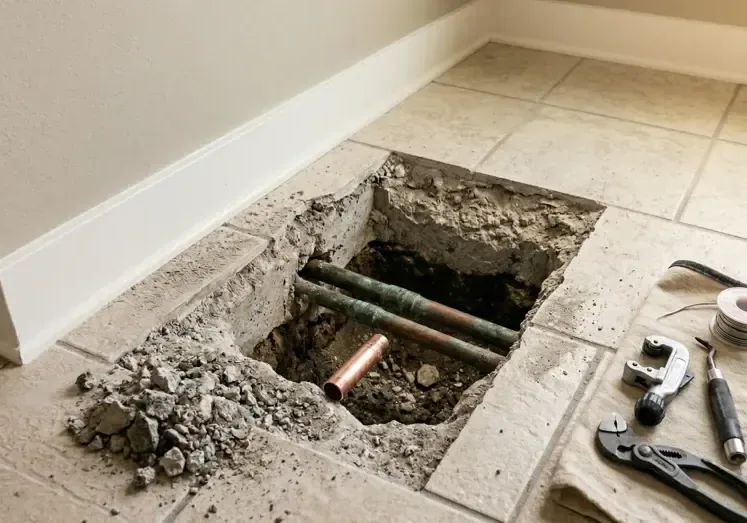
First steps for slab leak water damage
- Describe the unexplained wet patch. The initial report should identify where dampness appeared, whether it returns after wiping and which floor surfaces adjoin it. These observations give the leak specialist a starting point for tracing the source.
- Arrange plumbing source location. A plumbing assessment can locate the failed component and define repair access. Moisture mapping then establishes the affected building materials beyond the opening needed for that repair.
- Keep the floor area accessible. Movable dry furniture can be relocated safely so the wet perimeter and adjoining walls remain available for measurement, while damaged flooring stays undisturbed until assessed.
- Hold finish installation decisions. Replacement coverings and adhesive should wait for substrate assessment. Early planning can identify separate repair tasks without closing the floor before retained moisture has been addressed.
What does slab leak water damage cost in Calabasas, CA?
Slab leak damage cleanup in Calabasas depends on the floor layers affected and access to retained moisture. The ranges describe restoration around the leak; plumbing detection, pipe repair and replacement flooring should be identified separately when the written scope is prepared.
For a closer planning number, run the water damage cost calculator. The restoration contractor who responds prices the job after the walkthrough and the moisture map.
How slab leak water damage proceeds
- Step 1
Establish the moisture pattern
Floor and perimeter readings define the affected area, using comparable dry material to interpret moisture beneath the covering before access or equipment placement is selected.
- Step 2
Coordinate with the pipe repair
Repair access and drying access are considered together so the failed component can be corrected while surrounding wet materials remain reachable for the restoration work.
- Step 3
Address covered moisture pockets
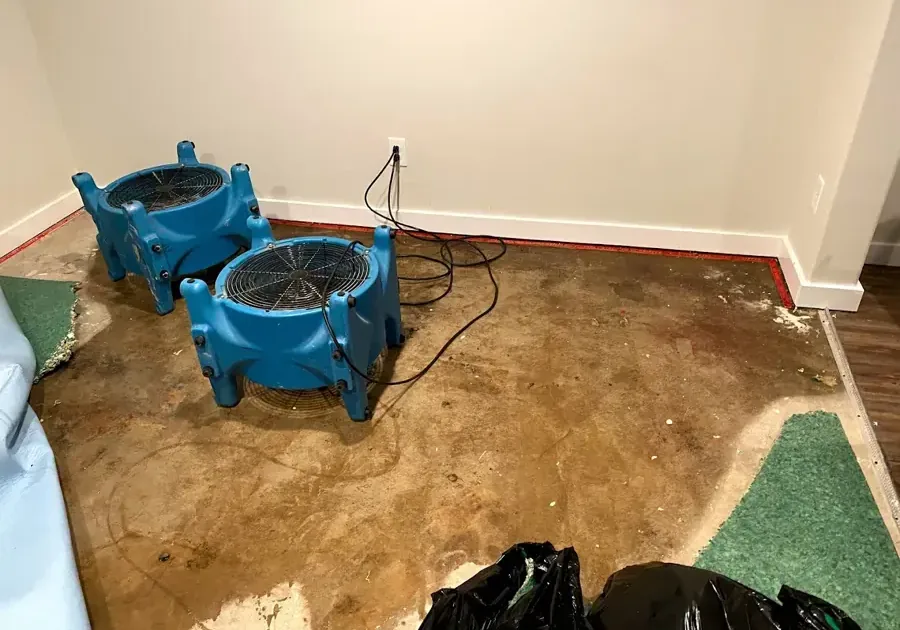
Access beneath unsuitable coverings exposes wet substrate for evaporation. Lower wall materials receive attention where moisture extends along the floor boundary.
- Step 4
Record readiness for resurfacing
Measurements and visible condition are documented before the flooring trade evaluates preparation, adhesive requirements and the remaining work needed to return the room to use.
A wet floor seam can be the first visible sign of moisture beneath the room. The opening decision should follow source location and a map of the affected materials. Randomly lifting flooring may expose damage without finding the pipe fault that continues supplying water beneath the assembly.
Separate locating the leak from drying damage
For a property in Mulwood, the inspection needs to establish the actual construction beneath the wet surface. The same applies in Mulholland Heights and along Valley Circle Boulevard. Plumbing access and restoration access serve different purposes, even when they begin at the same floor opening.
Once the source is located, the plumbing professional can define the repair. The restoration assessment checks water retained outside that repair area. Adhesive, underlayment and lower wall edges may remain damp after the pipe has been corrected and loose water is no longer visible.
Choose access around the wet substrate
A floor covering can restrict evaporation from material underneath. The decision to lift or retain it depends on adhesion, damage, contamination and whether useful drying access exists. Measurements should include the boundary between affected flooring and comparable dry material in the room.
- Check adjoining wall bases where moisture reaches the floor perimeter.
- Identify layered coverings that may conceal a separate damp substrate.
- Record the repair opening and the wider moisture affected area.
- Delay new adhesive or floor covering until substrate readiness is assessed.
A clear path back to a finished floor
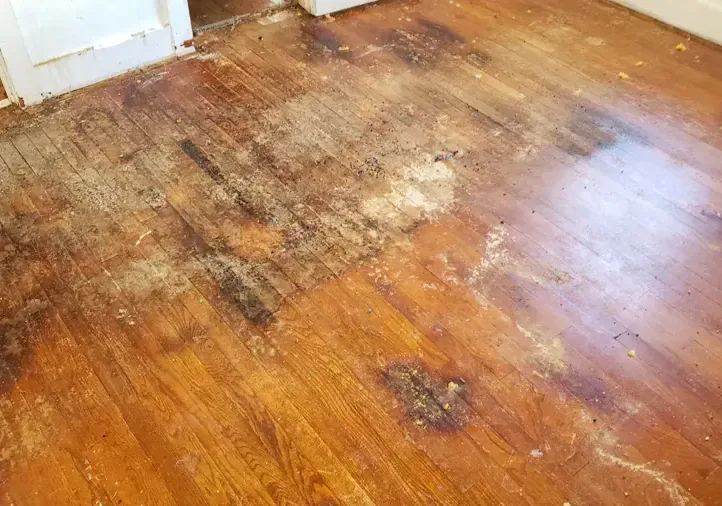
Structural drying can address exposed materials after source repair, with readings showing progress beneath the former covering. If wood boards have changed shape, hardwood floor damage assessment considers their condition alongside moisture in the substrate.
The final documentation should distinguish a dry assembly from a completed floor replacement. Surface preparation, matching materials and finish installation may remain separate tasks. Keeping those decisions distinct helps prevent a newly installed covering from concealing a substrate that still needs attention.
Slab leak water damage around Calabasas
Calabasas slab leak damage requests can include properties in 91301 and 91302. Access planning should identify the affected floor, plumbing repair status and any rooms connected through the same covering or adjoining wet wall base.
The same service nearby: slab leak water damage in Tarzana, Beverly Hills, San Fernando.
Related water damage services in Calabasas
Slab Leak Water Damage questions in Calabasas, CA
Does damp flooring identify the source by itself?
The wet area shows where moisture reached the surface, but source location still needs an inspection. Plumbing assessment and moisture mapping work together to separate the failed component from the resulting damage beneath the covering.
Can flooring remain during the drying work?
Retention depends on the type of covering, its condition and access to the wet substrate. An adhered or damaged layer may restrict drying, while another assembly may allow useful access without complete floor removal.
Why inspect the wall beside the floor?
Water at the floor perimeter can enter trim and lower wall materials. Checking those edges helps define the full affected assembly so a floor repair does not leave adjacent moisture concealed behind intact looking finishes.
Is pipe repair included in restoration pricing?
The written proposal should identify the scope clearly. Source location and plumbing repair may be handled separately from extraction, drying and material removal, with the owner coordinating authorization for each part of the work.
Can a new floor go over the old wet layer?
Installation should follow an assessment of moisture, substrate condition and the new covering's requirements. Concealing a damp layer can limit evaporation and complicate the performance of adhesive or other materials used in the new installation.
What records help the flooring installer?
The location of the repair opening, affected layers, drying measurements and remaining surface damage are useful. Those records help the installer plan substrate preparation and evaluate the assembly before selecting the next restoration step.
Resolve the moisture beneath the finish
A coordinated assessment connects pipe repair with the surrounding floor damage, giving the owner a practical sequence for drying, substrate preparation and the eventual return of finished flooring.
(888) 578-6508Discuss the damp floor assemblyTarzana Water Damage Restoration
Tarzana, CA and Los Angeles County
(888) 578-6508 · open 24/7
Water and sewage losses only
Find us on Google