San Fernando Slab Leak Water Damage
Damp floor seams can remain after a concealed plumbing leak is stopped. Restoration examines the covering, adhesive and substrate together so repairs do not close over moisture that still needs a way out.
(888) 578-6508Discuss moisture beneath the floor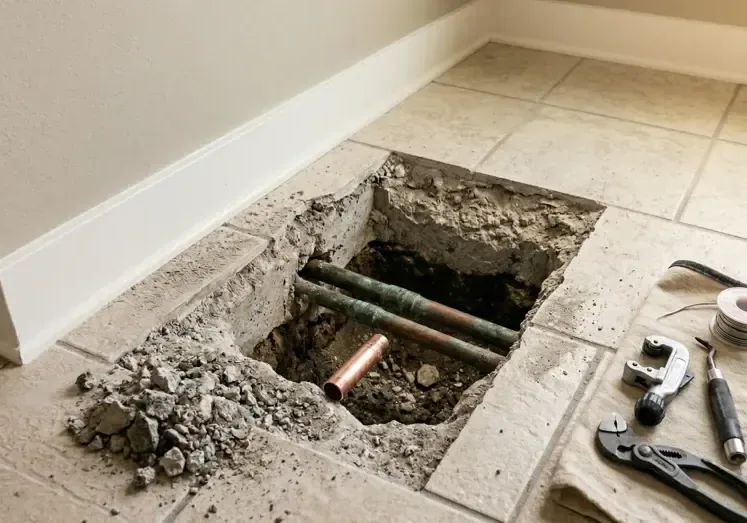
First steps for slab leak water damage
- Record the visible floor changes. Note damp joints, discolored edges or areas where flooring has lifted. Photograph the location without prying up finishes or enlarging an existing opening in the floor.
- Coordinate a plumbing investigation. Explain whether water use changes the wet area and whether a supply has been isolated. Source location and repair should be handled by the appropriate plumbing professional.
- Arrange access to connected rooms. Provide keys and identify furniture that blocks perimeter inspection. A concealed leak can require checking both sides of a wall even when only one side looks damp.
- Keep the repair opening protected. Leave cutting and excavation to the trade responsible for access. Prevent occupants from stepping into exposed areas while restoration evaluates moisture around the repaired plumbing location.
What does slab leak water damage cost in San Fernando, CA?
Slab leak water damage costs in San Fernando depend on wet floor layers, access and the extent of trapped moisture. These restoration ranges help compare scope sizes. Leak detection, plumbing excavation, pipe repair and replacement flooring should be identified separately in proposals.
For a closer planning number, run the water damage cost calculator. The restoration contractor who responds prices the job after the walkthrough and the moisture map.
How slab leak water damage proceeds
- Step 1
Map the damp perimeter
Inspect seams and lower walls around the reported problem. Measurements establish where additional access is useful and which neighboring areas provide a comparison.
- Step 2
Document the floor assembly
Identify covering, adhesive and substrate where accessible. The material combination helps determine whether drying can proceed in place or needs selective exposure beneath the finish.
- Step 3
Dry the accessible wet layers
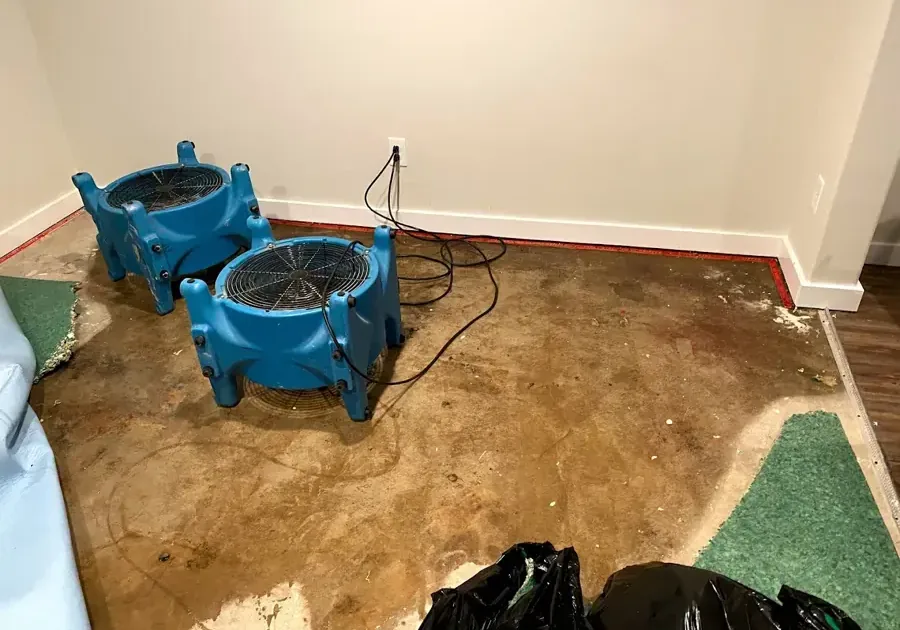
Position equipment for the assembly and maintain controlled access. Repeat checks show whether moisture is declining or whether another trapped area needs attention.
- Step 4
Prepare for floor reinstatement
Provide final material readings and a record of openings. The flooring installer can then assess substrate readiness and product requirements before committing to replacement work.
A damp seam beside a wall can reveal a problem beneath the finished floor. The immediate task is to establish the water source with the plumbing professional. Once that work is coordinated, restoration determines how far moisture has moved through the floor and adjoining lower wall materials.
Start with the layers present at this property
Tile, wood, underlayment and concrete respond differently to water. The assessment records the actual assembly before deciding how to reach trapped moisture. Surface readings alone may leave questions about adhesive beds or concealed substrate, particularly when a covering limits evaporation from the material below it.
For an occupied property near Layne Park, arrange access around furniture and identify any rooms that cannot be entered without the owner's permission. Planning the inspection route first helps keep unnecessary disruption out of dry spaces while the wet boundary is established.
Coordinate openings with the plumbing access
A repair excavation and a drying opening serve different purposes. The plumber needs access to the failed part; the restoration team needs access to wet layers. Properties around Pioneer Park and Rudy Ortega Sr. Park benefit from an agreed room plan before either task changes the floor.
- Record where discoloration first appeared along the finished floor edge.
- Identify coverings that remain attached over a potentially wet substrate.
- Keep removed flooring samples labeled by room for later matching.
- Discuss protection around any exposed repair opening before occupants return.
Choose the next step from measured conditions
Moisture trapped beneath boards may call for hardwood floor assessment. Exposed assemblies can then receive structural drying with measurements appropriate to the material. Replacement covering should follow a documented evaluation of the substrate and the installation requirements.
Keep the plumbing repair record, opening locations and drying results together. That record helps the flooring contractor understand what was disturbed and what remains to be restored before the room can return to ordinary use.
Slab leak water damage around San Fernando
Assessment planning includes homes near Casa de López Adobe and along First Street. Describe the floor covering, occupied rooms and any existing plumbing opening so access can be coordinated around the property's actual affected spaces.
The same service nearby: slab leak water damage in Tarzana, West Hollywood, Beverly Hills.
Water damage restoration in San Fernando · every town covered
Related water damage services in San Fernando
Slab Leak Water Damage questions in San Fernando, CA
Does a damp floor identify a slab leak?
It identifies an area needing investigation. Plumbing, appliance and other water sources can produce similar surface signs, so source location should precede decisions about excavation or the restoration work around the floor.
Can concrete retain water after extraction?
Concrete can hold moisture even when no liquid remains on top. The assessment considers the slab together with floor coverings and adhesives to decide how retained moisture can be measured and released.
Will all flooring have to be lifted?
The extent of removal depends on access, condition and the materials involved. A written scope should explain where lifting is necessary and where an assembly can be evaluated or dried through other access.
Who handles the actual pipe repair?
A plumbing professional addresses source location and repair. Restoration handles the resulting moisture and damaged finishes. Coordinating both scopes helps keep the repair opening and drying needs clear for everyone involved.
When can new covering be installed?
Installation follows the substrate assessment and the flooring product's requirements. A visually dry surface is insufficient by itself; recorded moisture conditions help the installer decide whether the assembly is ready for the selected material.
Should wet boards be sanded immediately?
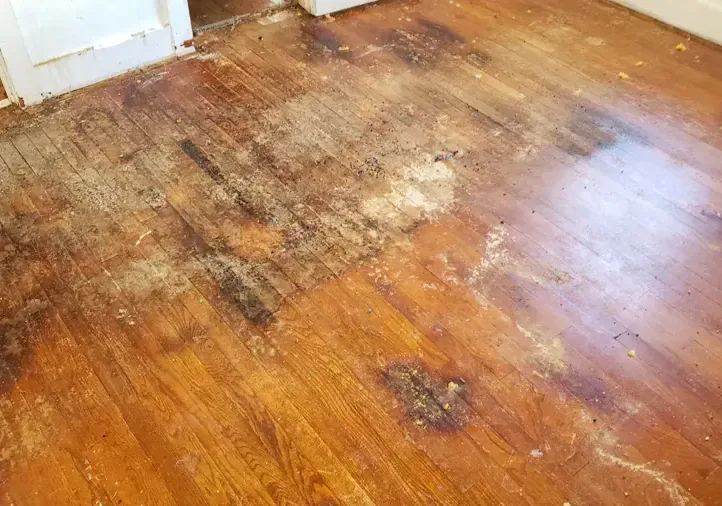
Sanding before moisture stabilizes can create further finishing problems. Assess the boards and substrate first, then decide whether controlled drying, replacement or later refinishing is appropriate for the actual floor condition.
Understand the moisture beneath the finish
A clear scope separates pipe repair from building drying and helps the next contractor plan reinstatement around documented floor conditions instead of the appearance of the surface.
(888) 578-6508Discuss the damp substrateTarzana Water Damage Restoration
Tarzana, CA and Los Angeles County
(888) 578-6508 · open 24/7
Water and sewage losses only
Find us on Google